Budget Binder: What Goes In It and How to Set It Up in an Hour
A budget binder is a physical home for your money paperwork: the plan, the bills, the progress. It suits people who think better on paper, households that budget together at the kitchen table, and anyone who has tried three apps and opened none of them after February.
The risk is building a binder with 60 printables that nobody fills in. Below is the version with only the pages that get used.
We’re not financial advisors. This is general information to help you organize your own finances.
What a Budget Binder Is For
A budget binder keeps the monthly plan and the things that change it in one place. You open it once a week for a short check-in and once a month to close the month and plan the next one. If a page doesn’t get used in either of those sessions, it doesn’t belong in the binder.
1. What goes in a budget binder
Five sections cover almost every household:
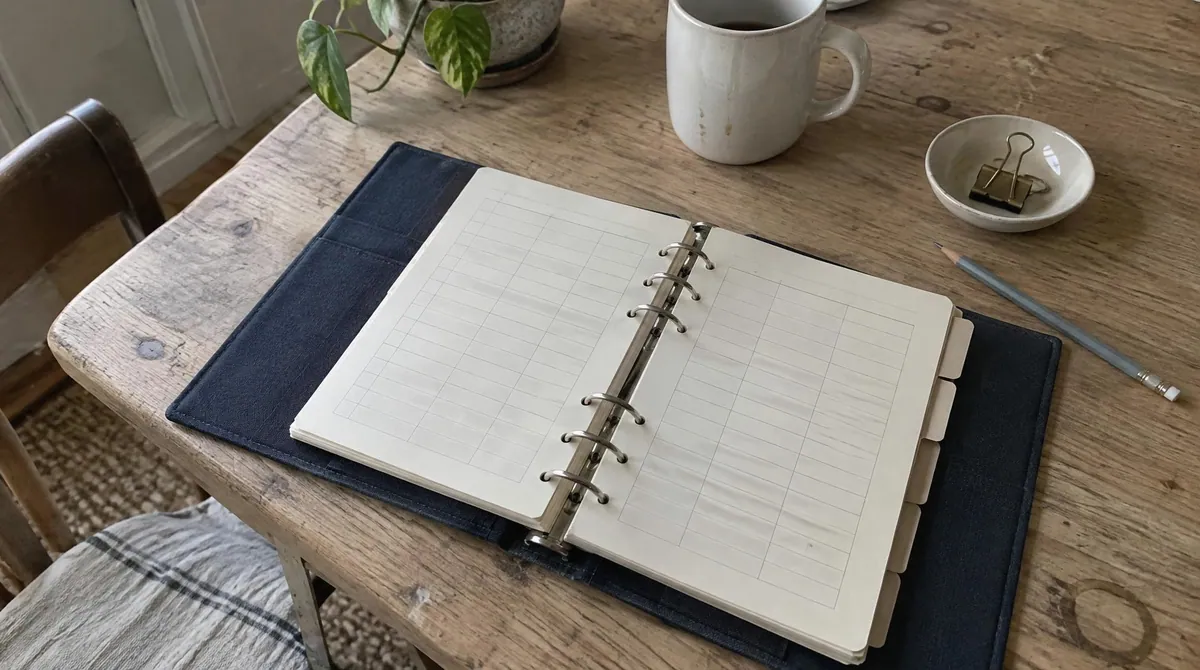
1. Monthly budget pages 2. Bill tracker 3. Savings tracker 4. Debt payoff page 5. Envelope pockets for cash and receipts
Add a calendar page at the front if your bills have scattered due dates. Everything else is optional.
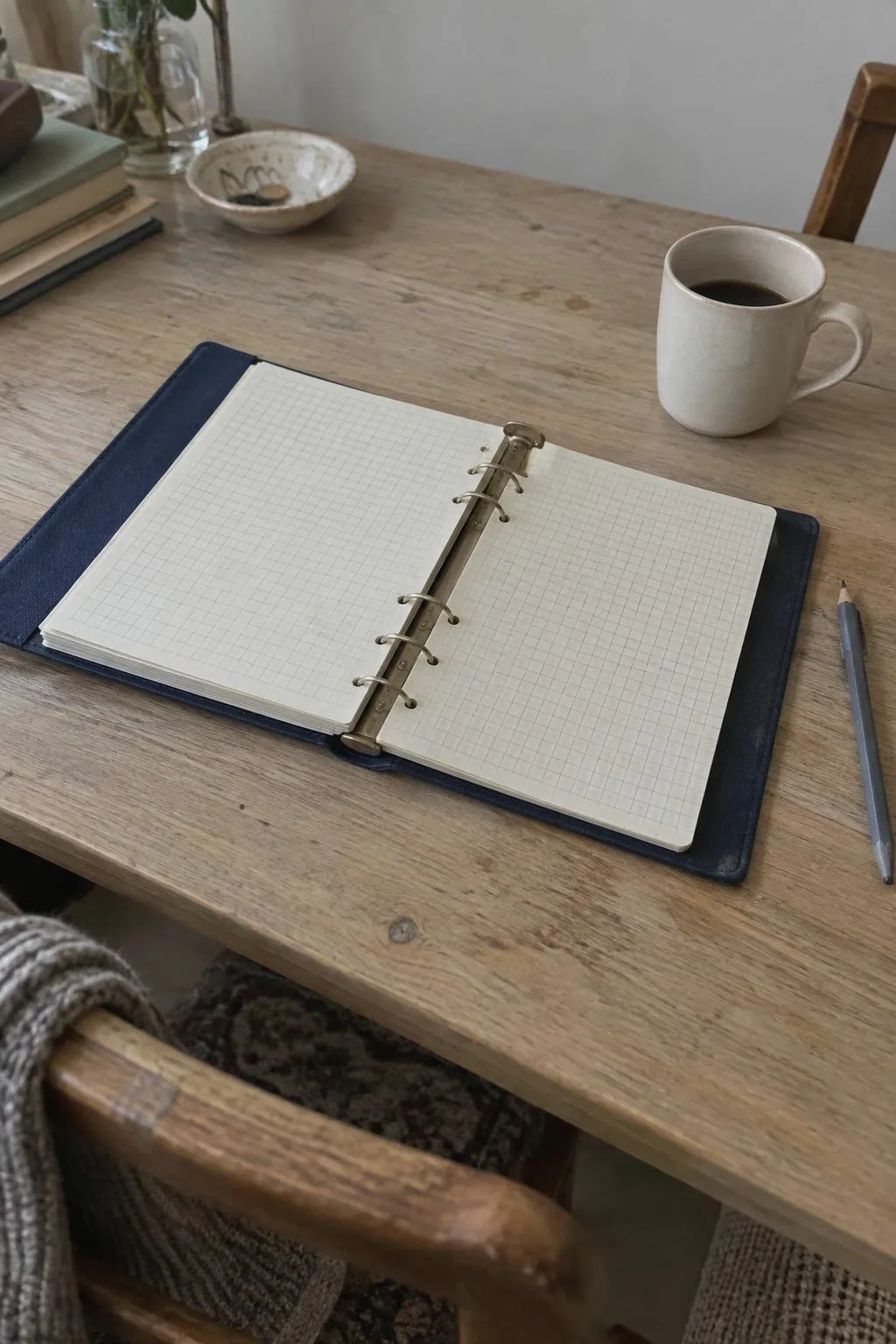
You’ll need a 1-inch ring binder, five divider tabs, clear zip pockets and a pencil. Pencil, not pen, because numbers change.
2. Monthly budget pages
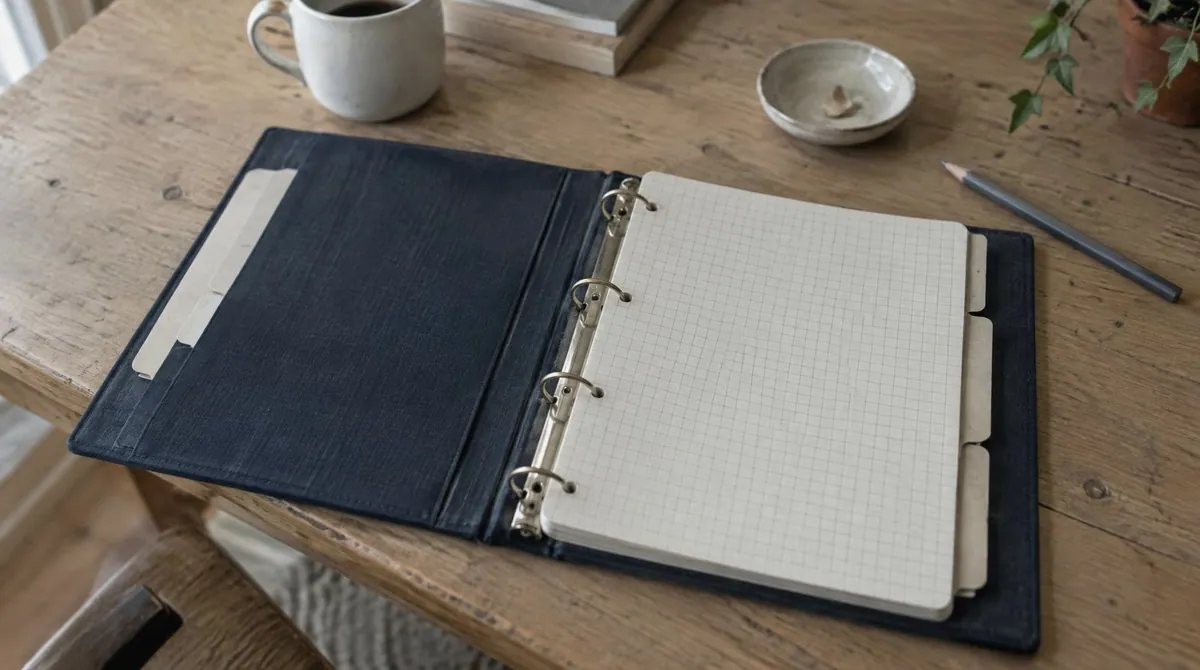
One page per month: take-home income, fixed bills, variable categories, savings and a line for what’s left. Fill it in during the last week of the previous month, then compare actual spending at the end.
Keep the last 12 months in the binder. Three months of filled-in pages show your real spending better than any estimate, and a year shows the seasonal costs that catch people off guard. Our free One-Page Month is designed to be the main page of a binder like this.
3. Bill tracker
A table with every bill, its amount, due date and a column for each month to tick off when it’s paid. One glance tells you what’s still due this month.
Include the irregular ones: annual subscriptions, car registration, insurance premiums paid twice a year. Those are the bills that wreck a month when they’re forgotten, and our sinking funds guide covers how to save for them in advance.
4. Savings tracker
One page per savings goal with the target, the date and a simple visual you can fill in: a bar with 20 sections, a grid of boxes, a thermometer. Shade a section every time you make a deposit.
It sounds simple, and it is. Seeing progress on paper keeps a goal real in a way that a balance in an app doesn’t. Our savings tracker and saving money chart guides have layouts you can copy.
5. Debt payoff page
List every debt with its balance, interest rate and minimum payment. Mark which one gets the extra payment. Update the balances once a month.
Either order works, smallest balance first or highest interest first; what matters is that the page shows the balances falling. Our pay off debt guide compares both methods.
6. Envelope pockets
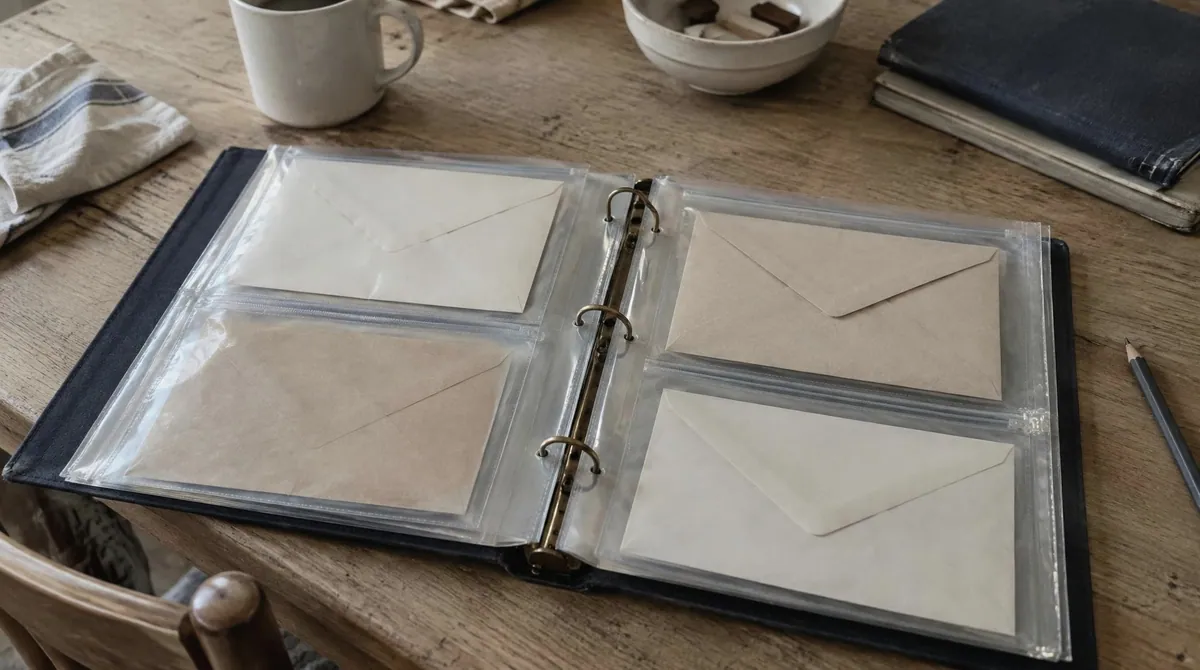
Clear zip pockets at the back of the binder hold cash for the categories you pay in cash, plus receipts you need to keep for returns or taxes.
You don’t need to run your whole budget in cash. Many people use envelopes for just one or two categories that tend to run over, usually groceries or eating out. When the envelope is empty, the category is done for the month.
7. How to set it up in an hour
1. Print or draw the pages: 12 monthly pages, a bill tracker, one savings tracker per goal, one debt page. (20 minutes) 2. Label the tabs and put the sections in order. (5 minutes) 3. Fill in the bill tracker from last month’s bank statement. (15 minutes) 4. Fill in this month’s budget page. (15 minutes) 5. Add the debts and current savings balances. (5 minutes)
After that, the binder needs about ten minutes a week and half an hour at the end of each month.
8. What we would skip
Daily spending logs, meal planners, cleaning schedules and goal-setting worksheets. They make the binder thicker and the weekly check-in longer.
Expensive printable bundles. A plain grid on letter paper does the same job.
A Budget Binder Routine
| When | What | Time |
|---|---|---|
| Weekly | Compare spending with the plan, tick off paid bills | 10 minutes |
| Monthly | Close the month, plan the next one, update debts and savings | 30 minutes |
| Quarterly | Review goals, add or retire savings pages | 15 minutes |
If you’d like more on the pages themselves, our free budget planner article walks through the five pages most households need.
What We Would Skip
Decorating the binder before using it. It’s tempting, and it often replaces the actual budgeting.
Keeping old bank statements in the binder. Most banks store them online; keep only what you need.
Starting with every section at once. A monthly page and a bill tracker are enough for the first month.
Where We Would Start
Get a binder, print one monthly page and a bill tracker, and fill both in from last month’s statement. Use them for a month. Add the savings and debt pages in month two, once the weekly check-in is a habit. If you’re new to budgeting, our budget template guide helps you pick the right monthly layout.
Questions We Get Asked
What should be in a budget binder?
Monthly budget pages, a bill tracker, a savings tracker, a debt payoff page and envelope pockets for cash and receipts. A calendar page is useful if your bills are due at scattered dates.
Is a budget binder better than an app?
It’s better for people who think on paper or budget together with a partner. Apps are better for automatic transaction import. The best one is the one you’ll open every week.
How do I start a budget binder?
Start with two pages, a monthly budget and a bill tracker, filled in from last month’s statement. Add savings and debt pages once the weekly check-in is a habit.
What size binder is best for a budget binder?
A 1-inch ring binder holds a year of monthly pages plus trackers. Letter or A5 both work; A5 is easier to keep in a drawer.
Do I need to use cash envelopes in a budget binder?
No. Many people use envelopes for one or two categories only, or not at all. They’re useful for categories that tend to run over.
Where can I get free budget binder printables?
Our One-Page Month is free and prints on Letter or A4. Plain grid paper works just as well for the trackers.